Posted on
5 min
read
/
By
Clay Thomas
Let's face it, when it comes to a cheap Japan eSIM, we all want to save a few cents if we can. However, does cheaper always mean better?
If you've been shopping for a cheap Japan eSIM, you've probably noticed prices ranging from a few dollars to well over $50. However, it's not always clear what you're actually getting. That gap raises a real question. Are budget plans genuinely good value, or are you trading short-term savings for a frustrating trip?
The honest answer is, it depends. But it depends on things most travelers don't check before buying.
What "Cheap" Actually Means for a Japan eSIM
The price you see on a plan listing is rarely the full picture. A cheap Japan eSIM that looks like a steal may not hold up once you read the fine print. Here are a few things to check carefully before committing fully.
For instance, a $5 plan sounds great until you realize it's 1 GB valid for only 3 days. A $12 plan offering 1 GB valid for 7 days gives a much longer window for the same data. Same budget, very different value.
One of the most important metrics that actually matter is cost per gigabyte, not the overall sticker price. Take the total plan price, divide it by the usable high-speed data, and compare across plans. That's where budget eSIMs often lose their edge.
Additionally, there are also hidden costs built into low-priced plans. A cheap Japan eSIM may look affordable upfront, but these extras don't show up in the headline number:
Zero to no hotspot support means you can't share your connection with a travel partner or tablet.
No name carrier providing low quality data for slow speeds and poor connection.
Aggressive throttling means the data you paid for becomes unusable before your trip ends.
The Real Trade-Offs of Low-Cost Japan eSIM Plans
Network Quality and Coverage Gaps
Budget eSIM providers often use a single lower-tier network to keep costs down. In Tokyo or Osaka, you may not notice the difference. But Japan isn't just major cities.
If you're heading to Hokkaido, exploring rural Kyushu, or island-hopping in Okinawa, weak coverage becomes a real problem. Those are exactly the moments when a cheap Japan eSIM on a weak network lets you down.
For starters, NTT Docomo and KDDI are two of the most trusted networks in Japan for nationwide reliability. Docomo in particular is know to have the strongest coverage in rural and mountainous areas. Any plan that doesn't clearly state or is secretive about announcing its carrier is worth being cautious about.
"Unlimited" Plans and Fair Usage Policy
This is probably the most misunderstood part of the Japan eSIM market.
Three words: Fair Usage Policy (FUP). This acronym is a hidden detail dodgy providers like to skip over if they can. In short, this means that even "unlimited" plans can be throttled if your usage is deemed excessive. Some unlimited plans can throttle your usage after as little as 1GB of high-speed data per day. After that, speeds can drop to 384 Kbps or lower. That's barely usable for maps and completely useless for streaming or video calls.
Fixed data plans give you full-speed access to every gigabyte you paid for. No daily caps, no throttling surprises. You get to choose the way your data is used. For most travelers, a well-sized fixed plan can deliver more usable data per dollar. An dodgy unlimited plan that slows to a crawl by midday rarely wins on actual value.
When comparing plans, always check the actual daily high-speed allowance on any cheap Japan eSIM you're considering. Don't just look at whether a plan calls itself unlimited. There is a big difference between "unlimited" and "truly unlimited" eSIM.
What Cheap Japan eSIM Plans Often Skip
Beyond throttling and coverage, budget plans routinely leave out features that matter. Here's what to watch for:
Hotspot and tethering is often restricted or removed entirely on low-cost plans.
Customer support is thinner on budget options (Not ideal when you're at Narita Airport trying to get online).
How Much Data Do You Actually Need in Japan
Most cheap eSIM guides skip this entirely. That leaves travelers guessing and usually either overpaying or running short.
Here's a practical breakdown by usage type :
Light use (maps, messaging, Google Translate, occasional browsing): around 300 to 500 MB per day. For a 1 week trip, 5 to 10 GB is enough.
Moderate use (social media, active navigation, a few video calls, light streaming): around 1GB to 2GB per day. A 20 GB plan covers most trips comfortably.
Heavy use (remote work, frequent video calls, app games, streaming, hotspot sharing): 3 GB per day or more. This is where larger 50 GB plans or truly unlimited eSIM options without daily caps become worth the extra cost.
"Carefree" use (heavy live streaming, broadcasting, music, multiple device video calls, AI use, background app usage): Truly unlimited data is a must. The best way to consider this category would be, "do you worry about data use in your daily life?" If the answer is no, you might want to consider an truly unlimited esim option plan.
Overall, knowing your usage upfront makes it much easier to evaluate a cheap Japan eSIM. You'll spot fast whether a plan is actually a good deal for your trip.
What to Check Before Buying a Cheap Japan eSIM

Before you commit to any cheap Japan eSIM, run through this checklist:
Network carrier. Does the plan specify a trustworthy, local provider such as NTT Docomo, KDDI, or SoftBank? If it's vague, ask. Network matters most outside major cities.
Daily high-speed cap. Find the fair use threshold even if the plan says unlimited. How many GB do you get at full speed before throttling kicks in? Is there a truly unlimited eSIM option?
Hotspot support. Is tethering allowed? Is there a separate daily hotspot data limit?
Activation deadline vs. validity start date. These are two different things. The activation deadline is how long you have to install the eSIM after purchase. The validity period starts once you activate it. Confusing the two is one of the most common mistakes travelers make.
When a Cheap Japan eSIM Plan Is Worth It
A cheap Japan eSIM makes sense when your usage is low and your trip is short.
If you're visiting Japan for 24-48 hours and staying in major cities, a budget plan can work. Hotels, convenience stores, and cafes in urban Japan usually have decent Wi-Fi. You're not fully dependent on mobile data, and fallback options are relatively nearby, even thought you might need to jump through a. few hoops to get a connection.
A low-cost eSIM also works well as a backup alongside a primary plan. Some travelers keep a cheap Japan eSIM on standby in case their main plan has an issue. It adds a layer of security without much extra spend.
When a Cheap Japan eSIM Plan Falls Short
The cheap Japan eSIM options that look attractive on price often throttle fast, or provide a minute amount of data that is not worth the hassle. That happens right when you need connectivity the most.
Multi-city trips, rural travel, and island-hopping all expose coverage gaps common in budget plans. A cheap Japan eSIM on a single low-tier network won't follow you across the country the way a plan on Docomo or KDDI will.
Remote workers and digital nomads need consistent speeds throughout the day. A plan that throttles to near-zero by midday doesn't fit a real work schedule. Travelers relying on real-time translation and navigation use their data constantly in small amounts. Throttled speeds make those apps sluggish at the worst possible moments.
Groups sharing a hotspot burn through data fast. Low-cost plans with strict tethering caps or no hotspot support simply don't work for this use case.
What Journey Japan eSIM Offers Instead
Journey Japan eSIM is built specifically for Japan travel. It offers connection on NTT Docomo and KDDI, the two most reliable networks in the country. Coverage follows you from major cities to rural regions. You're not left searching for a signal when it matters most.
Fixed data plans have no daily caps and no throttling. You get full speed for the entire validity period. No fair use policy wall waiting halfway through your trip.
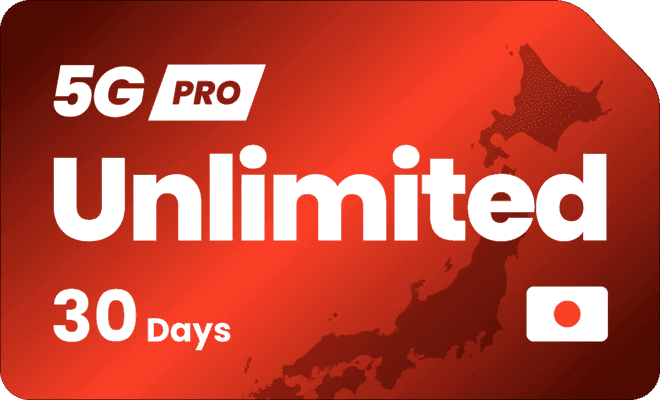
The Unlimited Japan eSIM, Unlimited Pro 5G plan accesses the fastest and most reliable data speeds around. That means stable speeds even in crowded spots like Shinjuku Station or busy tourist areas. No daily data limits, just consistent connectivity throughout your stay.
There's no app to download and no account to create. After purchase, your QR code and setup instructions arrive by email within minutes. Setup takes under 5 minutes on most devices. Coverage reaches 99% of Japan, including remote areas where cheaper plans often drop out.
Conclusion
Not every cheap Japan eSIM is a bad deal. But low price alone is never enough to evaluate a plan. The real question is how much quality and usable, full-speed data you're getting, on which network, and with what support if things go wrong.
For short city trips with minimal or light data needs, a budget plan can work perfectly fine. For anything more demanding, the savings usually disappear once you are stressed trying to get a connection, or throttling kicks in and you're left hunting for Wi-Fi.
If you want a Japan eSIM that performs from landing to departure, Journey Japan eSIM offers transparent plans, strong networks, and no unpleasant surprises. That's what makes truly makes an eSIM a, "cheap Japan eSIM". Saving time, money, and keeping your trip worry free. Easily worth every dollar.
Frequently Asked Questions (FAQs)
1. What is the cheapest eSIM option for Japan?
The cheapest plans can start around $5 to $7 for 1 GB over 1-2 days. These work for very light use on short trips. For most travelers, a 10GB or even a 20 GB fixed plan offers better value per gigabyte without the throttling risk.
2. Do Japan eSIMs really throttle after a certain amount of data?
Yes. Most "unlimited" Japan eSIMs throttle after a daily high-speed cap, typically 1 GB per day. Japan's Fair Usage Policy allows carriers to slow down heavy data users. A Japan eSIM with fixed data avoids this entirely. You get full speed until your data runs out.
3. Does it matter which network my Japan eSIM uses?
It matters significantly outside major cities. NTT Docomo has the widest rural and regional coverage in Japan. KDDI is also strong nationwide. Plans that don't specify their carrier often rely on lower-priority or roaming connections.
4. Can I buy a Japan eSIM after I arrive in Japan?
You can! It's normally recommended to purchase in advance to avoid issues upon arrival. Buying and installing before departure means you're connected the moment you land. You'll also need Wi-Fi to install the eSIM. That can be harder to find right on arrival.
5. Is a cheap Japan eSIM safe to buy from any provider?
Not all providers are equally trustworthy. Stick with providers that state their network partners clearly and offer reachable customer support. Verified reviews on platforms like Trustpilot are a good signal too. Providers with vague plan descriptions or very few reviews are worth avoiding, regardless of price.
4.9
USD
$84
Nouveau
4.9
USD
$59