Posted on
5 min
read
/
By
Clay Thomas
Japan plug type is one of those details most travelers ignore until they're standing in a hotel room at 11pm with a dead phone and a charger that won't fit the wall. It's a small thing. It's also the kind of small thing that cascades. No charge means no maps, no maps means no navigation, and suddenly you're lost in a city where the street signs are in a script you don't read yet.
Get this (and few other things) right before you leave home and you'll never think about it again. That's the goal here.
What Plug Type Does Japan Use?
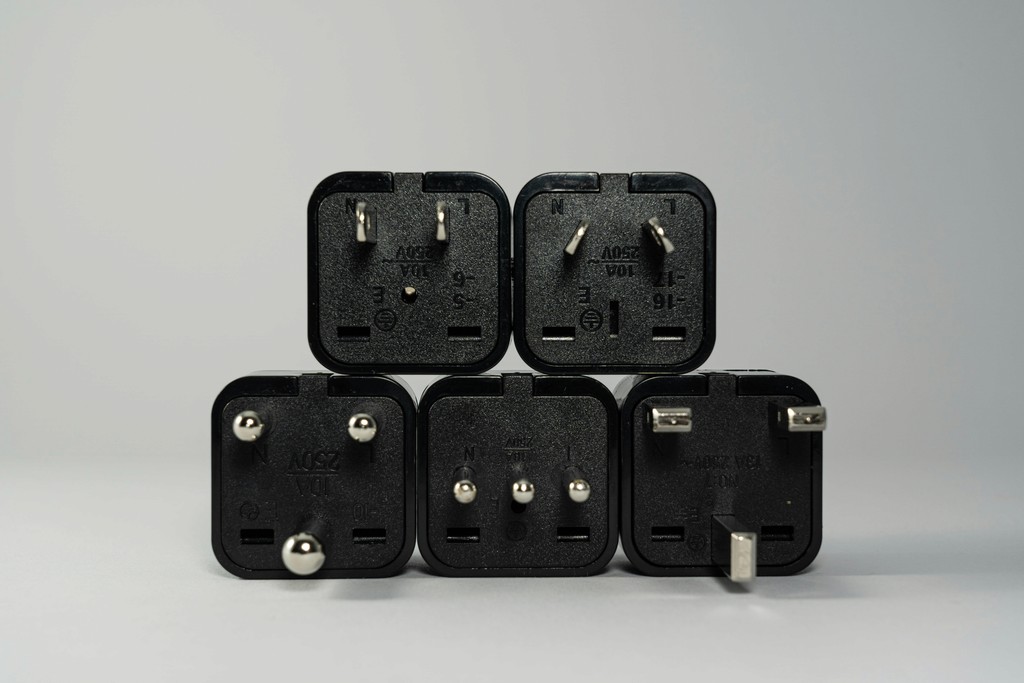
Japan uses Type A plugs. Two flat parallel pins, no grounding prong. If you're coming from the US or Canada, you're already most of the way there. Your plugs physically fit Japanese outlets without an adapter. That's the good news.
The voltage is where it gets slightly more interesting. Japan runs on 100V at either 50Hz (eastern Japan, including Tokyo) or 60Hz (western Japan, including place like Osaka and Kyoto). Most countries run on 220-240V. The US runs on 120V. Japan's 100V is the lowest standard voltage in the world, which is a fun fact that will never help you at a pub quiz but might explain why your high-powered hair dryer runs lukewarm.
Do I Need a Plug Adapter for Japan?
It depends on where you're from.
US and Canada travelers: Your plugs fit. No adapter needed. Just check that your device handles 100V. Most modern electronics (phones, laptops, cameras, tablets) list their voltage range right on the charger. Look for something like "100-240V" and you're fine. If it says that, plug it in and forget about it.
UK, Europe, Australia travelers: Your plugs don't fit Japanese outlets. You need a Type A adapter. These are normally cheap, compact, and worth buying before you leave rather than hunting for one at Narita or Haneda. Airport or inner city electronics shops will have them, but you'll pay a premium and waste time.
Travelers with grounded plugs (three-pin): Some US devices have a three-prong plug. Japan's outlets are two-hole only. You'll need a simple three-to-two prong adapter, which you probably have already or can pick up at any hardware store for almost nothing.
One thing to check: appliances with motors, like hair dryers and electric shavers, can be sensitive to the frequency difference (50Hz vs 60Hz). If you're in Tokyo and your device is expecting 60Hz, it may run slightly slower or warmer. For most things. Phone chargers, laptops, camera batteries. It genuinely doesn't matter.
Do Japanese Hotels Have Universal Outlets?
Mostly yes, for the bathroom at least. It's a quirk of Japanese hotel design: the bathroom shaving outlet near the mirror is often a universal dual-voltage socket, designed to work with foreign shavers and grooming devices. For that one specific use case, you're covered.
For the room itself, standard Japanese Type A outlets are the norm. Some international hotels in larger populated cities such as Tokyo and Osaka will have added universal outlets at the desk. Budget guesthouses and older ryokan probably won't. Don't assume. Bring the adapter.
Power strips in Japan are widely available at convenience stores and electronics shops (Yodobashi Camera, Bic Camera) if you find yourself short on outlets. They're inexpensive at a couple hundred yen, and useful if you're traveling with multiple devices.
Capsule Hotels and Business Hotels
Capsule hotels usually have one outlet or USB-A port inside the capsule itself. That's enough to charge a phone overnight, but if you're traveling with a laptop or camera batteries, you'll be doing the bulk of your charging in the communal lounge where shared outlets and work tables are set up for it. Some lockers have a power point inside for keeping a laptop secure while it charges, but don't count on it. Pack a short USB cable for the lounge sessions.
Business hotels (Toyoko Inn, APA, Dormy Inn, and the like) are the workhorse of Japan travel. Mainly used by, you guessed it, business workers and salaryman, these overnight accommodations are ment for just that, overnight. Very tiny rooms but practical, usually two Type A outlets near the desk and one near the bed. No real surprises. The only thing to watch for: if your power strip has a wide-base plug, it might block adjacent outlets in those tight desk setups.
What About Power Banks and Voltage Converters?
Power banks are a different question from plug adapters. The power bank itself charges via USB, which runs well under the voltage threshold anyway. As long as your USB cable and wall charger are rated for 100-240V, you're fine charging a power bank in Japan.
Voltage converters are for appliances that genuinely can't handle Japan's 100V. A US appliance rated strictly for 120V would technically be receiving less power than expected. In practice, most modern devices tolerate this without any issue. Where it matters is older or high-draw appliances: curling irons, certain medical devices, anything with a motor. For those, a step-up converter (100V to 120V or 240V) is worth carrying. For everything else, probably not necessary.
A Note on Extension Cords at Ryokan
Traditional ryokan often have outlets in inconvenient places. Sometimes just one, often behind the TV or low on the wall. If you're spending multiple nights in a ryokan, a short travel extension cord or multi-plug adapter is genuinely useful. It's one of those things experienced Japan travelers carry and first-timers wish they had.
Staying Connected in Japan: The Other Thing to Sort Before You Arrive
Sorting your plug situation is worth five minutes of prep. Sorting your data situation is worth slightly more, because getting it wrong costs you more than an awkward hotel phone call.
Japan's mobile networks are among the best in the world. Coverage extends across all 47 prefectures, including places that feel like they should have no business being covered. Mountain hiking trails in Nagano, rural Tohoku, ferry terminals off the coast of Kyushu. The infrastructure is genuinely impressive.
What's less impressive is scrambling for a pocket WiFi rental at the airport or discovering your home plan charges outrageous International roaming fees for trying to send a single text message in Japan. An eSIM installed before departure solves this cleanly. You land, your phone connects, and that's the end of the connectivity conversation. Data made easy for your trip.
Journey Japan eSIM is a Japan-only eSIM specialist, which means the focus is entirely on Japan connectivity rather than trying to cover 100+ destinations on a global platform. All plans are created with Japan travel in mind, covering up to 30-days, and with both fixed data and unlimited options depending on how you travel. The Unlimited Pro 5G plans run off Japan's direct local networks such as NTT Docomo and KDDI, offering speed and coverage across all areas and terrain. For anyone spending time outside, or traveling in between the main cities, that's not a minor detail, that's a major game changer.
Additionally, real testimony and user reviews reflect what travelers actually experience. With a high-ranking reviews (close to 5.0 stars on Trustpilot) across hundreds of posts, that's not just a marketing claim. It's real people writing after they got home from an unbelievable trip to share their experience. The endorsement from one of the most trusted voices on living and traveling in Japan, Chris Broad, Abroad in Japan on Youtube, carries the same weight.
Quick Pre-Departure Checklist
Before you leave, run through this list and you'll have both electricity and data sorted:
Check your device chargers for voltage range (look for 100-240V on the label)
If you're from outside North America, pack a Type A plug adapter
If any of your plugs are three-prong, pack a three-to-two adapter
Consider a small travel extension cord if you're staying in ryokan
Leave high-draw appliances at home if possible, or check converter requirements
Install your Japan eSIM before departure so you connect the moment you land
The plug situation takes maybe ten minutes to sort properly. The connectivity situation takes about the same, if you handle it in advance.
Conclusion
Japan's Type A outlets are straightforward. If you're American or Canadian, your plugs fit already. Everyone else needs a small adapter. Voltage is low by global standards, but modern electronics handle it without issue. Check your labels, pack a backup adapter, and move on.
The real preparation that pays off in Japan is less about the physical gear and more about the systems: knowing where you're going, having maps that work offline and online, being able to translate a menu or ask for directions. All of that runs through your phone. Which means it runs through your connectivity.
If you want data sorted before you land, take a look at Journey Japan eSIM. Japan-only focus, real coverage across the whole country, plans that match how you actually travel. One less thing to worry about and figure out at the airport.
Frequently Asked Questions
1.Will my laptop charger work in Japan?
Yes, almost certainly. Modern laptop chargers are rated 100-240V universal, so check the label on your charger brick for "Input: 100-240V" and you're set.
2. Are plug adapters available at Japan's airports?
Yes, but at a markup. Narita, Haneda, and Kansai sell them for 1,000 to 2,500 yen, far more than they cost back home, so grab one before you fly.
3. Should I buy a universal travel adapter or just a Type A?
For Japan only, just buy a Type A. They're tiny and cheap, and a bulkier universal adapter is only worth it if you're hitting multiple countries on the same trip.
4. Will my gaming console (Switch, PS5, Xbox) work in Japan?
Nintendo Switch and most modern handhelds are universal voltage and work fine. Larger consoles like PS5 and Xbox Series X often have region-locked power supplies, so check the label before shipping one for a long-term move.
5. Can I charge multiple devices at once in a Japanese hotel room?
Sometimes, but most rooms only have two outlets total. Bring a small power strip or a USB-C multi-port charger so you can cover phone, laptop, camera, and tablet without juggling.
6. How much data do I need for a typical Japan trip?
For most travelers, 1-2 GB per day handles maps, messaging, and photos. Heavy users streaming or hotspotting hit 3-5 GB, in which case an unlimited Japan eSIM saves you from watching the meter.

4.9
USD
$84
Nouveau
4.9
USD
$59

5 min
read
/
Posted on
eSIM Future Trends: Travel Connectivity Evolution Explained

5 min
read
/
Posted on
Best eSIM for Kyoto Trip: Stay Connected in Japan
5 min
read
/
Posted on
Remove Expired eSIM Plan: Complete iPhone & Android Guide
5 min
read
/
Posted on
Does Japan eSIM Expire? What You Need to Know Before Your Trip